
Industrial Fan Solutions By Industry
Start from the industry, production process and actual operating environment. QIYUE FAN connects ventilation duty, system resistance, temperature, dust, corrosion and safety requirements with suitable industrial fan directions.
Follow The Process, Not Only The Fan Type
The same fan family may serve several industries, while the same industry may require completely different fan constructions at different process points. Start with the process duty, then follow the related application and product route.
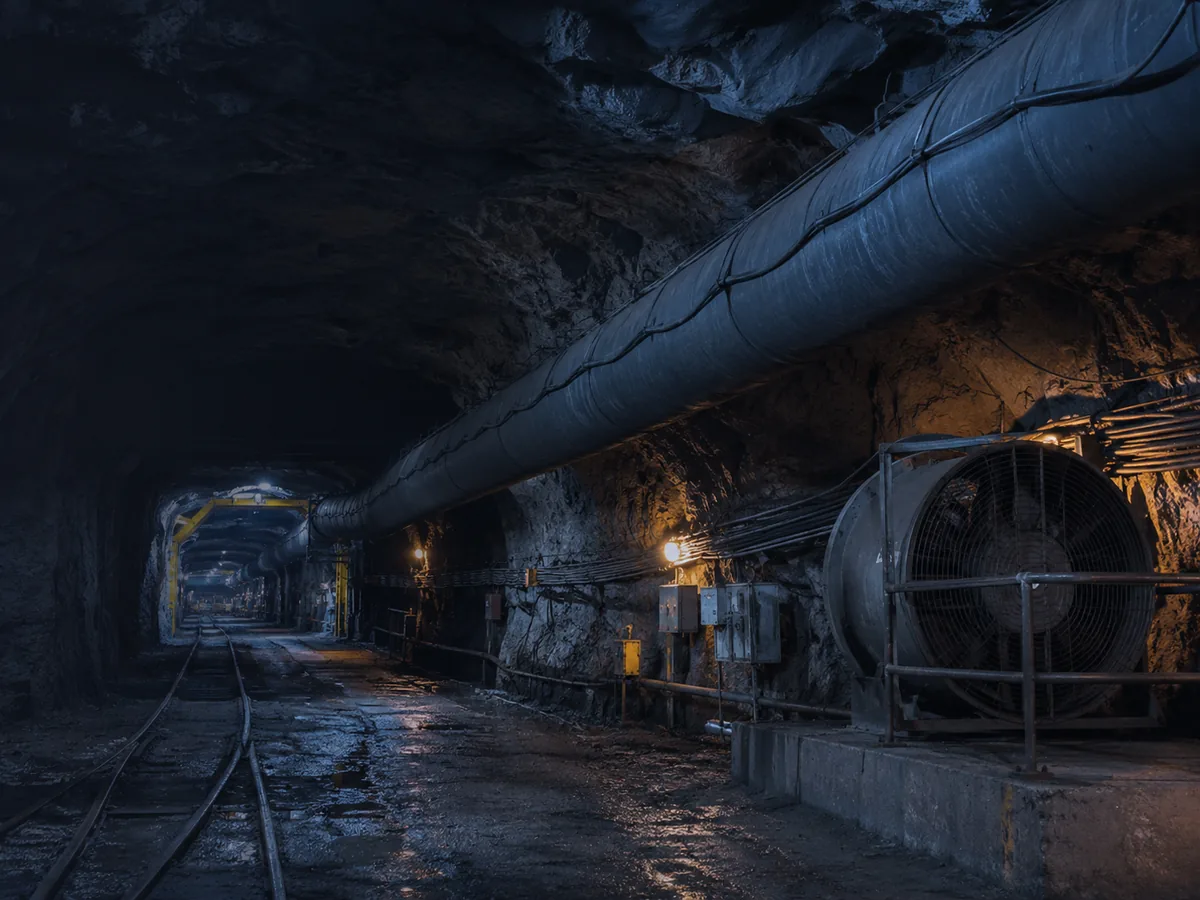
Main, Auxiliary & Local Mine Ventilation
Underground ventilation must deliver fresh air, dilute harmful gases, control heat and dust and maintain airflow through shafts, roadways and working faces.
Main Ventilation · Local Ventilation · Working-Face Air Supply · Dust & Gas Dilution

Long-Distance Construction Ventilation
Tunnel ventilation supplies fresh air to advancing work faces while removing blasting fumes, diesel exhaust, heat and suspended dust through long temporary or permanent ventilation routes.
Ventilation Distance · Duct Leakage · Pressure Loss · Working-Face Airflow

Corrosive Gas, Scrubber & Process Exhaust
Chemical ventilation projects may involve acid mist, humid gas, condensation, scrubber resistance and media that require careful material compatibility review.
Gas Composition · Humidity · Condensation · Temperature · Material Compatibility

Cooling, Furnace Air & Fume Control
Steel production uses industrial fans for rolling-line cooling, combustion and furnace air, high-temperature exhaust, fume extraction and dust-control systems.
Air Cooling · Furnace Air · Hot-Gas Exhaust · Fume Extraction · Dust Collection

Kiln Draft, Mill Ventilation & Dust Control
Cement and lime plants combine high-temperature gas, abrasive mineral dust, large system resistance and continuous-duty operating requirements.
Kiln Draft · Mill Ventilation · Baghouse Exhaust · Pneumatic Conveying · Clinker Cooling
Five Conditions That Can Change The Fan
Two projects in the same industry may require different fan materials, speeds, motors and arrangements when the operating conditions change.
High Temperature
Temperature, duration, cooling and bearing protection.
Dust & Abrasion
Concentration, particle size, hardness and fan position.
Corrosion
Composition, humidity, condensation and material compatibility.
System Resistance
Ducts, filters, scrubbers, dampers, leakage and altitude.
Safety & Motor
Hazardous area, voltage, frequency and project standards.
Engineering References For Industry Projects
Industrial Fan Airflow and Pressure Explained
Read guide →What to Send When Static Pressure Is Unknown
Read guide →Gas Temperature vs Fan Performance
Read guide →Dust Collection System Airflow Calculation
Read guide →Know The Industry, But Not The Fan Model?
Send the process duty and available operating data. QIYUE FAN can review the required airflow, pressure, fan direction, motor and basic configuration.