
Home / Technical Articles / Tunnel Fan Package RFQ
Tunnel Fan Package RFQ: Fan, Duct and Control Scope
A tunnel ventilation inquiry can describe the fan duty clearly while leaving the supplied package unclear. Does the offer cover the fan and motors only, or also the control cabinet, variable frequency drives, cables, ducting and connection pieces? Resolve these boundaries before comparing quotations or requesting approval.
Define the fan, duct and control-package scope for construction-stage ventilation. Use the tunnel fan selection guide to establish the airflow and pressure basis; use this worksheet to identify who supplies each part and which documents require review.
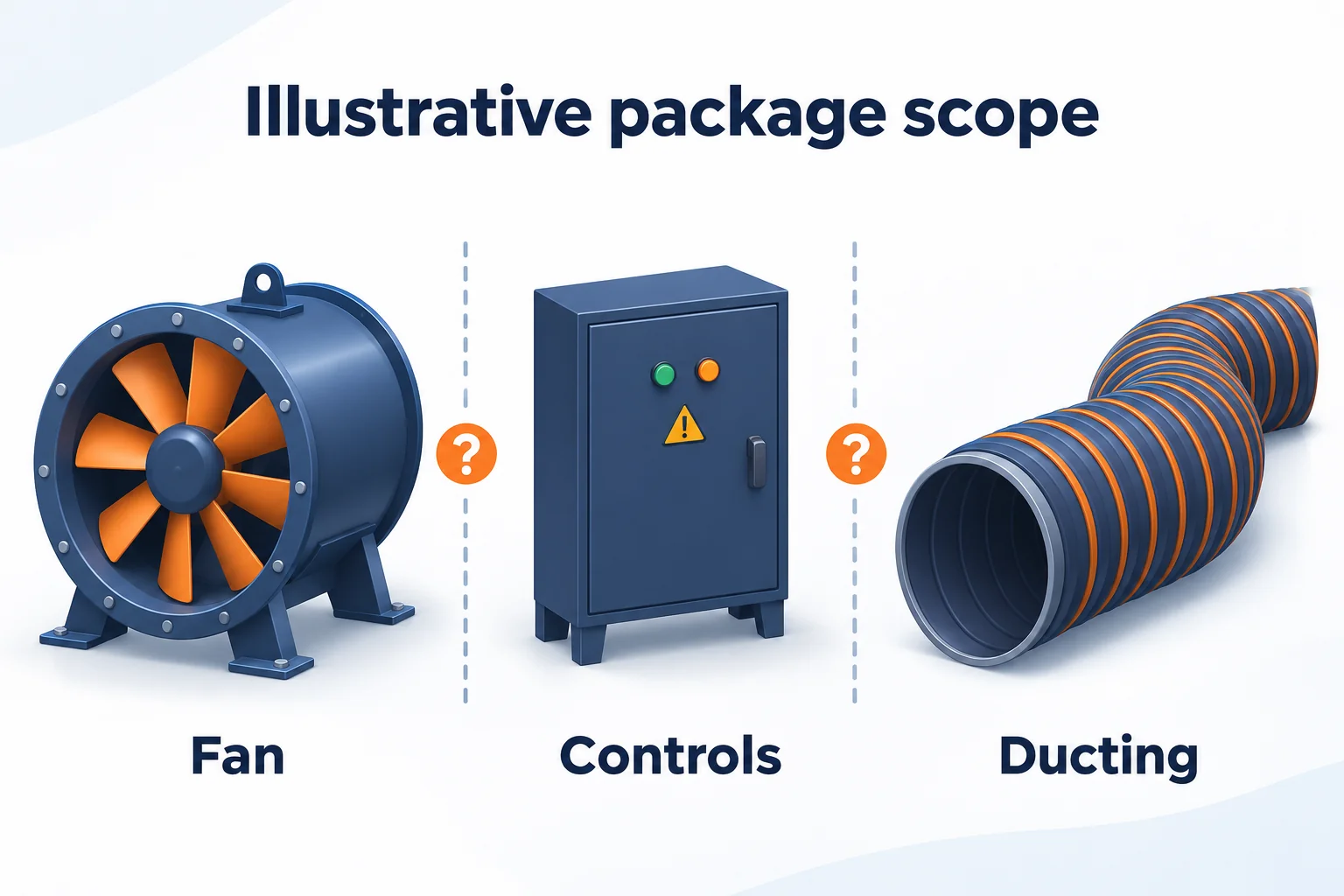
Keep selection data and supply scope separate
A duct diameter in an RFQ helps define the system interface. It does not automatically mean the fan supplier must supply that duct. Similarly, a request for variable-speed operation does not define the number, location or contents of control cabinets.
State the required duty, construction stage and electrical supply in the technical brief. Then create a separate scope record tied to the same RFQ revision. If required data are unknown, mark them for clarification instead of filling gaps from a similar catalog model.
Use four scope labels consistently
- Included: expressly included in the named supplier's offer, with quantity and specification reference.
- Excluded: expressly outside that offer; identify whether another procurement action is needed.
- By others: assigned to a named project party, with the connection or handover boundary stated.
- TBC: not yet agreed; identify the person responsible for clarification and the required decision date.
These labels describe procurement scope, not automatic approval of technical suitability. Each item also needs an owner, supporting document and unresolved-interface note. Do not leave an essential item marked “Excluded” without checking how the project will obtain it.
Package responsibility worksheet
Copy the following seven records into the RFQ. For every record, complete: status / supplying party / specification or drawing / interface owner / open item. Leave the status as TBC until the offer and project responsibilities are explicit.
1. Fan assembly
Identify the proposed fan configuration, equipment tag and assembly boundary. Clarify whether the offer includes its base or support arrangement and any specifically requested accessories. Reference the duty point and agreed mechanical layout; do not treat a motor-power description as a complete fan specification.
2. Motors and stages
Identify the motors associated with the proposed fan stages and the motor information to be submitted. Distinguish a multi-stage arrangement from a single-stage configuration. Ask the supplier to confirm the proposed arrangement against the actual duty rather than assuming every tunnel fan uses the same stage configuration.
3. Control cabinet or starter enclosure
State whether cabinets are included, supplied separately or provided by another party. Clarify cabinet quantity, intended location, equipment served and document responsibility. Record any requested separate-enclosure arrangement as a requirement to review, not as a universally necessary design.
4. Variable frequency drives
Identify whether VFDs are included and where they sit within the package boundary. Ask for the proposed motor-and-drive compatibility information and approval documents. Separate VFDs are not a default requirement for every fan or stage; the electrical designer and equipment supplier must confirm the applicable arrangement.
5. Cables and electrical interfaces
Clarify who supplies the interconnecting cables and who defines their specification, routing and termination interfaces. Record responsibility for installation, connection and testing. Cable selection, protection settings and wiring details belong in the approved electrical design, not in assumptions added to a purchasing checklist.
6. Ventilation duct
State whether duct is included in the fan offer, purchased separately or already available at site. Reference the project duct requirements and identify who confirms the fan-to-duct interface. Do not assume that a quoted fan includes the complete duct route or that an existing duct is suitable without review.
7. Transitions and connection pieces
Identify the fan outlet connection, duct connection and any required transition or joining pieces. Assign responsibility for each interface drawing and supplied piece. Matching a nominal diameter alone does not settle the physical connection or the scope of joining components.
Prepare an approval register before the order
A catalog can help a buyer review a product family, but it is not the same as approval of the selected package. Ask the project team which documents are required and who may approve them.
For each submission, record:
- Document title, equipment tag, revision and issue date.
- Purpose: preliminary review, technical approval or final record.
- Supplier or designer responsible for preparing it.
- Reviewing party and authorized approver.
- Required response date and current status.
- Comments, deviations and the revision that resolves them.
Potential submissions include the selected fan datasheet and performance basis, mechanical arrangement and connection drawing, motor information, proposed control-package scope, applicable electrical documents and duct-interface details. Agree the document and component list in the project quotation.
Close interfaces, not just prices
Before treating two offers as comparable, resolve TBC items and record accepted exclusions or responsibilities assigned to others. Keep the package worksheet and approval register with the current quotation revision. A later change to duct supply or cabinet scope should remain visible rather than being buried in an email attachment.
Review the SDF tunnel fan page for configuration directions. To request a package review, contact QIYUE FAN with the duty information, scope worksheet and required approval documents. Final supply and technical responsibilities must be confirmed for the actual project.