
How To Start An Industrial Fan Replacement When Only Photos Are Available
Start with the Evidence You Have
Old equipment is often still operating long after drawings, catalogs and original selection records have been lost.
Photos can identify visible configuration and start the inquiry, but they cannot establish the required operating point by themselves.
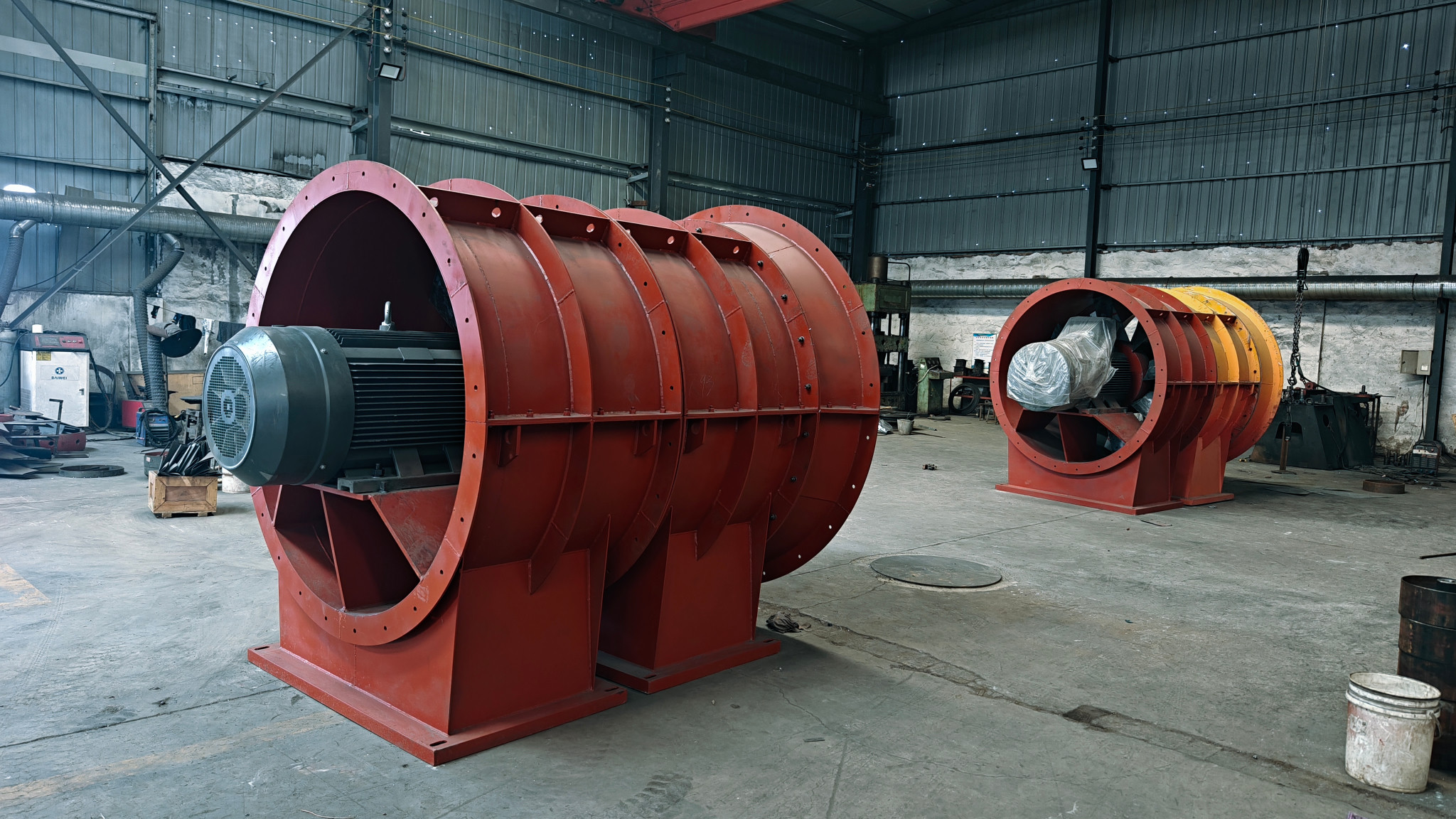
Turn a wide view into useful replacement information
Connection: follow up with the flange dimensions and bolt pattern. Support: record the mounting-foot positions and center height. Drive: add a readable motor-plate photograph and identify the unit it belongs to. The wide view connects these details; the close-ups and measurements make them usable.
Clear photos can help identify the general fan type, housing configuration, drive arrangement, motor position, inlet and outlet geometry, foundation style and other visible installation details.
What Photos Should You Take?
Take the complete fan first, then record the inlet, outlet, motor, drive, foundation, remaining identification tags and any dimensions that can be measured on site.
- Full fan from multiple sides, showing the motor and drive arrangement.
- Inlet and outlet openings, rotation arrow and discharge direction.
- Base, anchor holes, supports and the surrounding duct route.
- Fan and motor plates, tags, guards, visible wear and corrosion.
Include a tape measure or another known-size reference where possible.
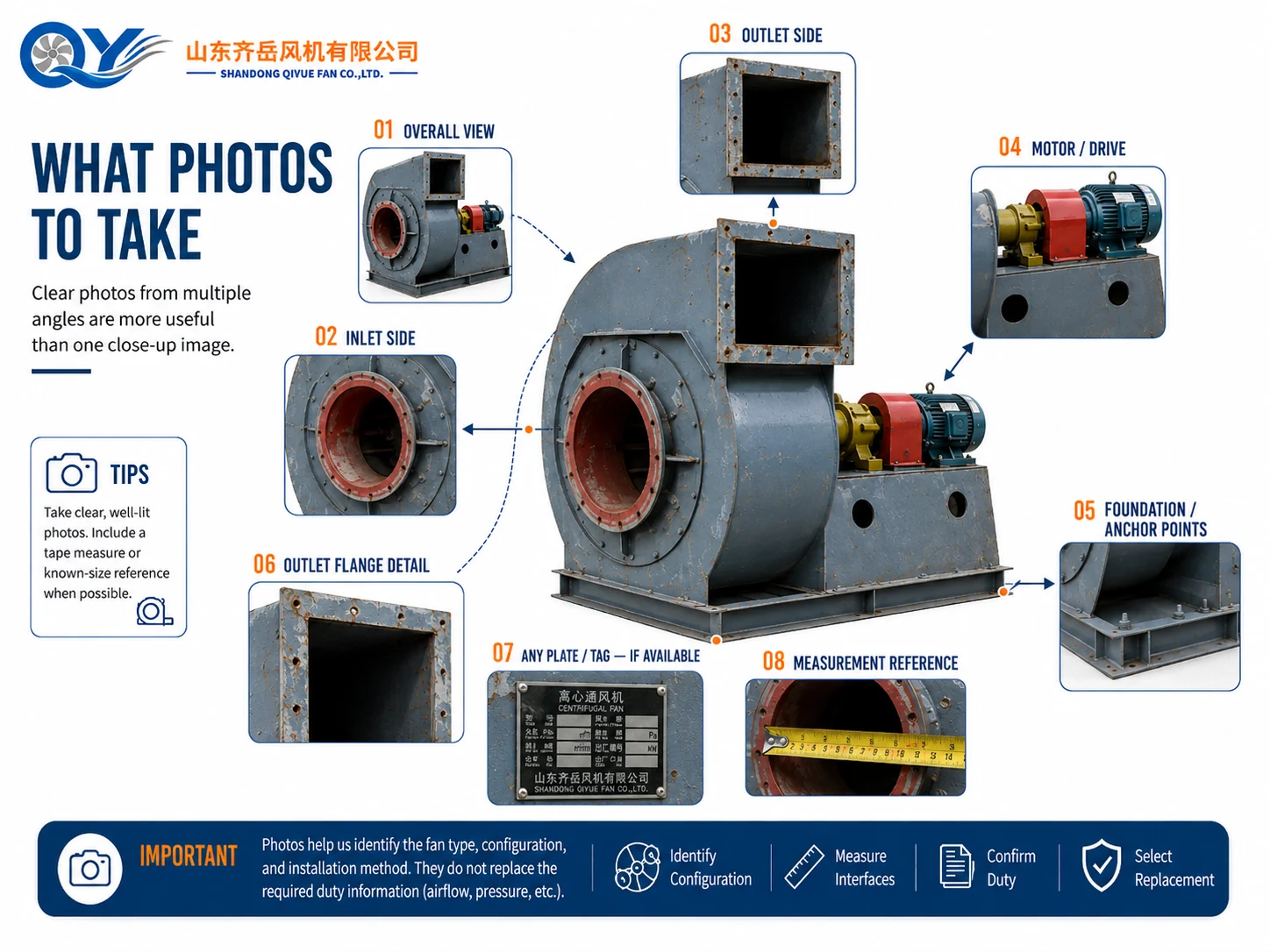
Illustrated photo checklist: collect the full view, connections, drive, base and identification details using safe site access.
Measure the Installation Interfaces
The most useful field measurements are the dimensions that determine whether the new fan can physically connect to the existing ductwork and foundation.
- Inlet and outlet opening sizes, flange details and centerline positions.
- Foundation footprint, base height and anchor-bolt spacing.
- Motor envelope, rotation, discharge orientation and maintenance clearance.
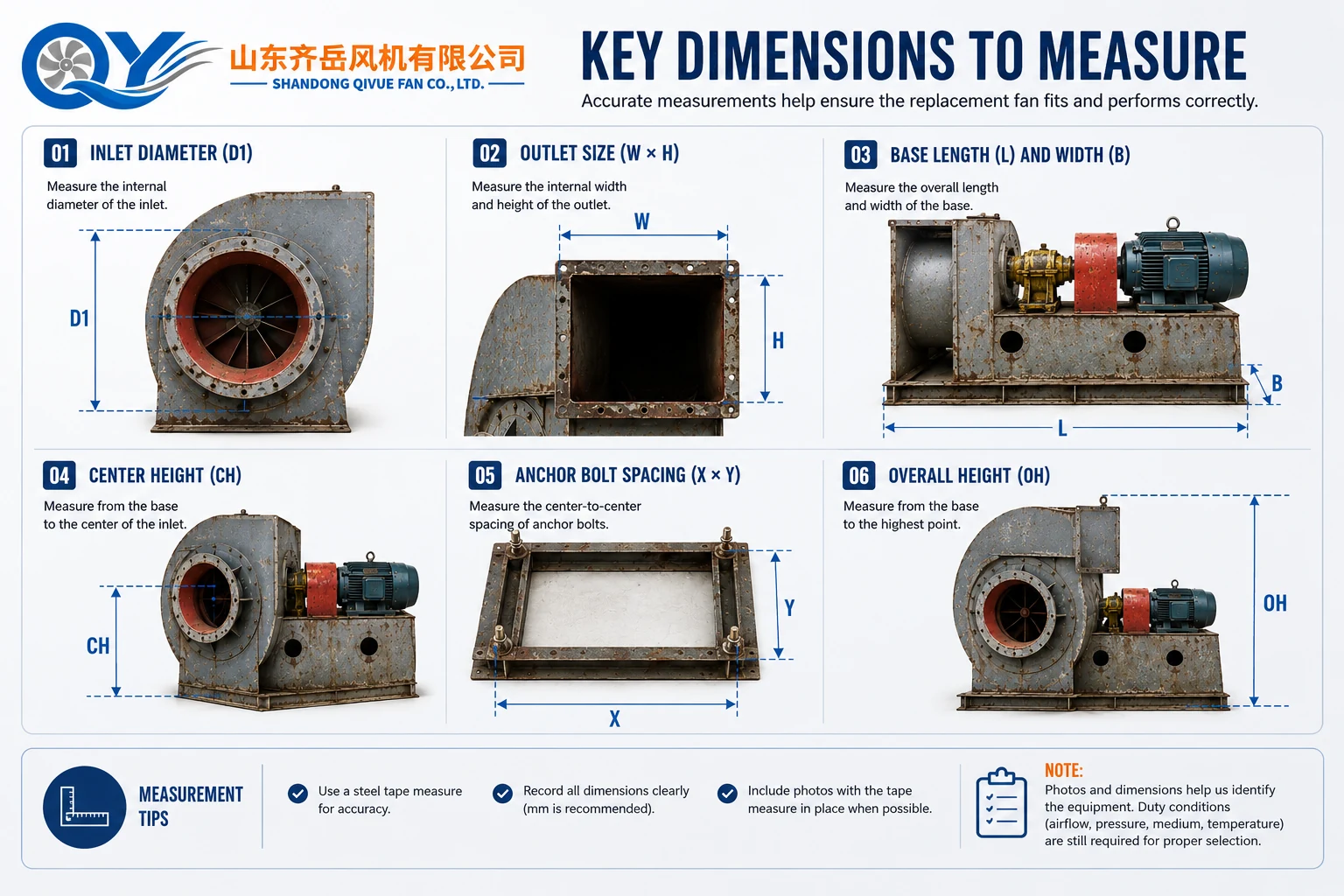
Measurement-location illustration. Record the actual site values, units and reference points for the replacement drawing.
Keep Each Fan and Its Evidence Together
For several replacement fans, use one equipment ID per unit and keep its photos, measurements and operating records together. Similar housings or adjacent image files do not prove that a motor plate belongs to that fan.
- Identify the unit: record the site equipment tag and a full-view photo showing its location.
- Name each image: include the equipment ID, view (inlet, outlet, drive or plate) and date. Keep an untouched original alongside any annotated copy.
- Label measurements: state units, measurement points and who measured them. Mark estimated or inaccessible dimensions as unverified, not zero.
- Separate observations from assumptions: distinguish a visible arrow or legible plate from a guessed model, rotation or duty point. Send contradictions for review rather than choosing one silently.
This evidence record helps the supplier ask focused follow-up questions; it is not a substitute for an approved selection or installation drawing.
Photos Cannot Confirm Airflow or Pressure
If the current duty is unknown, the next step is not to guess from the fan dimensions. Instead, use any available historical or system evidence to recover, calculate or measure the required operating point.
Use any old fan plate, curve, datasheet, duct and filter information or reliable site measurement to establish the selection basis. Note the medium, temperature and any changes to the process since the old fan was installed.
Replacement from Photos FAQ
Can a photo identify the exact fan?
It can show the general fan type and visible configuration; the exact model and performance may remain uncertain.
Can the replacement be selected using only photos and dimensions?
Not reliably. Physical fit and the required airflow and pressure must both be checked.
What if the old nameplate is unreadable?
Send full fan and motor photos, key dimensions and any remaining drawing, curve or equipment record.
What if the static pressure is unknown?
Review the duct system, filters and process equipment, then calculate or measure the pressure basis before final selection.
Must the replacement use the same model designation?
Not necessarily. The new fan must meet the verified duty and installation interfaces; its internal design can differ.
Continue the Replacement Review
When the evidence is organized, use the replacement fan and spare-parts review to distinguish a complete assembly from a component request and confirm the remaining duty and interface information.
Use the nameplate guide, GA drawing guide and pressure-unknown guide to complete the evidence set.
Send clear photos, key dimensions and any old equipment information you still have. We can first identify the existing configuration, then determine what additional duty data is required before selecting a replacement fan.
Send Your Operating Conditions
Airflow, pressure, gas medium, temperature, voltage and quantity.