QIYUE FAN / INSTALLATION PLANNING
Outdoor Industrial Fan Specification: Beyond the Motor IP Rating
A fan beside a treatment plant, on an exposed platform or under a canopy needs an installation-specific package. Quote the weather exposure, motor arrangement and maintenance access together.
Define the location before selecting options
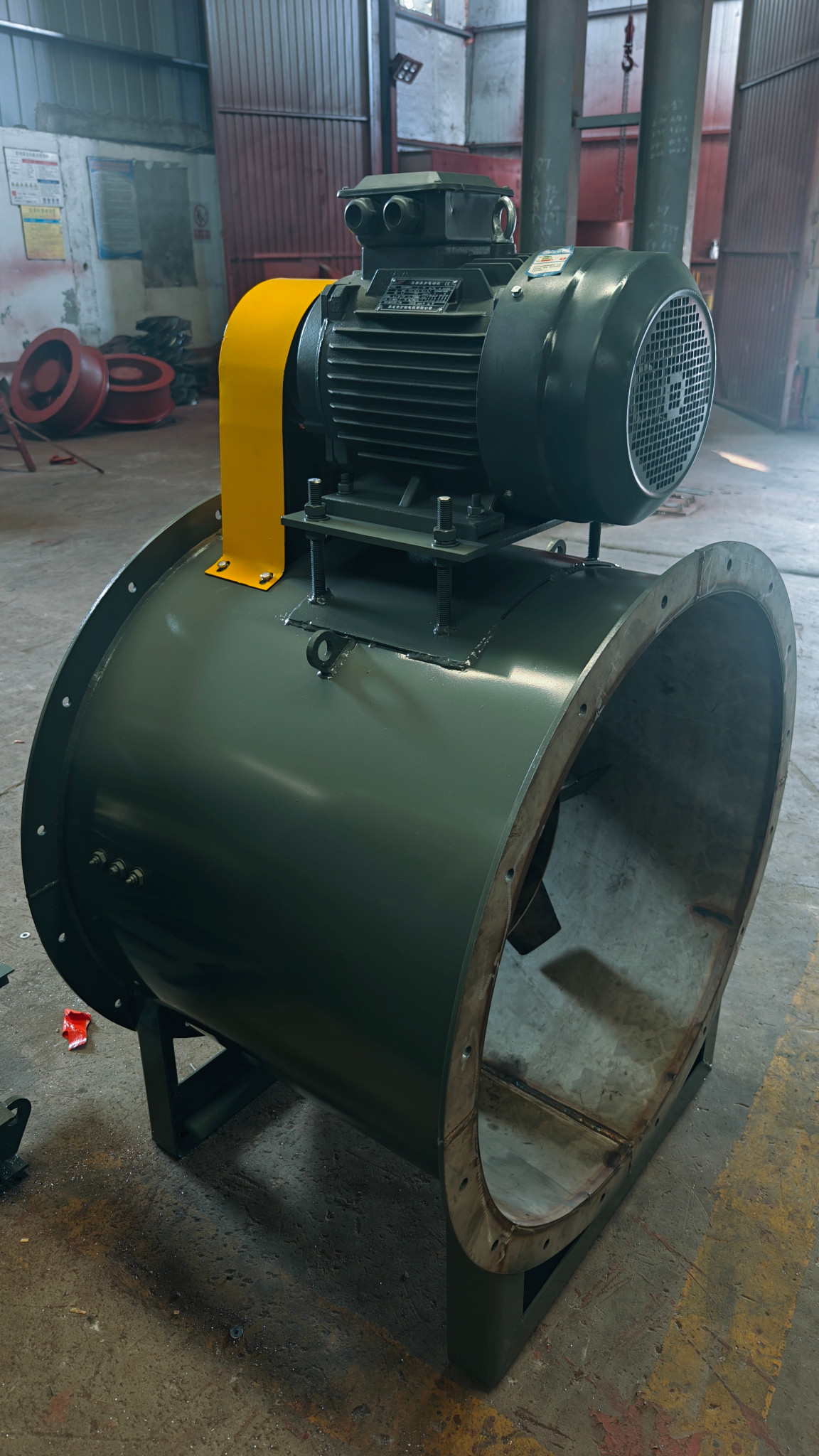
“Outdoor” can mean an open roof, a sheltered ground-level plant or a coastal platform. A photograph and a marked-up layout communicate these differences better than a single word on a requisition.
Exposure
Describe direct rain, driven rain, salt spray, dust, nearby process exhaust and any cleaning practice. State whether protection is provided by the building or included in the fan package.
Arrangement
Show the motor orientation, terminal-box position and cable approach. Include the fan inlet, outlet and nearby structures rather than photographing the motor alone.
Operation
Identify continuous or intermittent service, shutdown periods and local temperature and humidity conditions. Keep process-gas conditions separate from the motor environment.
Match the motor to the installed arrangement
ABB’s motor guide explains that an IP55 designation alone does not establish suitability for every outdoor situation. Exposure and mounting position matter. Its humidity guidance also addresses internal condensation as equipment heats and cools, and the role of appropriate drainage and heating arrangements.
Ask for the proposed motor manufacturer’s installation instructions and the options selected for this location. Drain configuration, terminal-box sealing and any anti-condensation equipment should be resolved for that motor and mounting position, not copied from another machine. Electrical installation and changes to drain arrangements belong to qualified personnel following those instructions.
Compare the complete supplied package
Separate the motor specification from the fan casing, drive guard, base and site-installed accessories. This makes two quotations comparable without treating one component’s protection rating as a rating for the whole assembly.
- Weather protection: identify what is included, its location and how it accommodates cooling airflow, inspection and lifting access.
- Materials and finish: define the external exposure separately from the gas-contact chemistry. Specify the coating scope for the actual components rather than only a colour.
- Connections: show the inlet and discharge interfaces, cable-entry responsibility and any site-provided duct or shelter.
- Maintenance space: confirm that a cover or nearby wall does not prevent access to the motor, drive or inspection points. Use the access review with the final arrangement drawing.
Resolve a change of installation early
When an indoor fan is relocated outside, send the existing nameplate, arrangement drawing and photographs of both locations. Request a comparison of the existing equipment against the new exposure before ordering replacement parts or a cover. The original duty point may be unchanged while the installation requirements are different.
For a hazardous atmosphere, weather protection and motor IP are separate from the required hazardous-area equipment selection.
Send a site-based enquiry
Share the required airflow and pressure, process medium, installation photograph, exposure description and power supply. Add the proposed mounting orientation and identify what the site contractor will supply. QIYUE can review the fan arrangement against that defined scope.
Related: motor ambient temperature and altitude · fan material selection · industrial fan range
Technical reference: ABB Low Voltage Motor Guide (2018), sections 5.5 and 9.5. Use the installation instructions supplied with the selected motor.