
QIYUE FAN / WOODWORKING EXTRACTION
Woodworking Dust Extraction Fan Selection: Start with the Machine Schedule
A saw, planer and sander do not create the same extraction requirement. Build the fan enquiry from the connected machines and their operating combinations, then define what reaches the fan inlet.
Turn the Machine List into Extraction Cases
For each machine, record its manufacturer, model, extraction connections and specified volume flow at each connection. Add the workshop layout and identify which machines run together. HSE’s woodworking guidance uses these inputs as the basis for extraction-system design, rather than a single workshop air-change figure.
A Useful Machine Schedule
- Machine and process: saw, planer, router or sander; timber or board being processed.
- Connection record: extraction-point identification, connection size and the machine supplier’s flow requirement.
- Operating group: which other machines work at the same time, including planned additions.
- Layout reference: branch route and connection to the common extraction system.
Distinguish Fine Dust from Chips
Include the material and process, not just the word “sawdust”. HSE notes that cutting, shaping and sanding produce different dust conditions, and that cutter-generated air movement affects capture. A fan upgrade cannot compensate for an unsuitable hood or missing extraction connection.
Mark the fan position relative to the separator and filter. Request the particulate concentration and particle characteristics expected at that specific inlet. A fan handling chips directly and a fan handling reduced-dust air after separation need different construction reviews.
Match the Fan to the Complete Extraction Duty
Obtain the system designer’s airflow and pressure requirement for each agreed operating case. Include the relevant ducts, collector resistance and discharge route. When another machine is added, review the shared network rather than simply adding its nameplate power to the existing fan motor rating.
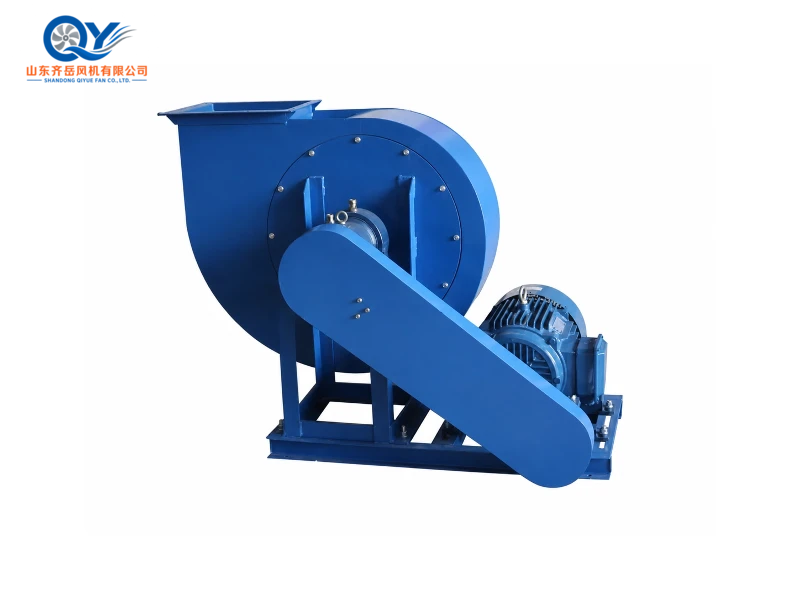
C6-48 is a product direction for light wood chips, sawdust and similar low-abrasion particles. Match its operating point, construction and inlet conditions to the specific extraction duty. Use the baghouse fan guide for collector-side duty definition.
For another published wood-chip and fine-fibre product range, review C4-73 performance by fan size and speed and its installation drawing. Compare the required operating point and connections with these product records; final size and construction depend on the material reaching the fan, collector position and project safety requirements.
Agree Capture and Safety Acceptance
Wood dust can create health, fire and explosion risks. Have the responsible specialists define capture performance, fire/explosion precautions and the required system verification. A dust-handling fan designation alone does not establish a protected installation.
Before ordering, agree who supplies the hoods, ducts, collector, fan and controls, and who demonstrates extraction at the active machines. Retain the commissioned operating settings and maintenance instructions for future changes.
Send the machine schedule and defined fan duty for selection review.
Turn the Schedule into a Supplier-Ready Record
Use a separate record for each extraction connection. A machine with several connections needs each connection identified. Attach the matching manual page or drawing so the supplier can trace each requirement to its source.
Copy and Complete for Each Connection
Machine tag / manufacturer / model:
Process and timber or board material:
Extraction connection ID / location:
Connection dimensions and drawing reference:
Required volume flow / units / source document:
Requirement supplied by / document revision:
Machines operating at the same time:
Existing, replacement or planned connection:
Marked-up layout and photo references:
Open information / person responsible:
Keep machine-supplier requirements separate from site measurements and proposed future values. If a connection requirement is missing, identify it for review rather than assigning the same flow to every connection.
Choose the Next Step for Your Project
New extraction system
Build the connected-machine list and operating groups before requesting fan selection.
Airflow planning guide →Another machine
Show the existing network and proposed connection together, including retained machines.
Branch-extension review →Replacement fan
Attach the old fan identity and available operating evidence to the current machine schedule.
Scope the site evidence →START A WOODWORKING FAN ENQUIRY →
Summarize the project and available duty data in the online form; keep the connection records, drawings and photographs ready for follow-up.
References: HSE: Wood dust and extraction; HSE WIS23: Wood dust, controlling the risks. Apply the requirements relevant to the project location.