
QIYUE FAN / WORKSHOP VENTILATION
Wall-Mounted Axial Exhaust Fans: Select the Complete Air Path
A fan that fits the wall opening can still miss the required airflow. Order the fan, weather-side accessories and air-entry arrangement as one coordinated ventilation duty.
Start with the room, not just the opening
Define the purpose: general air exchange, removal of excess heat, or a specified process duty. Give the designer the required exhaust volume and the intended source of replacement air. A door left open during a trial is not the same operating condition as a building with doors closed.
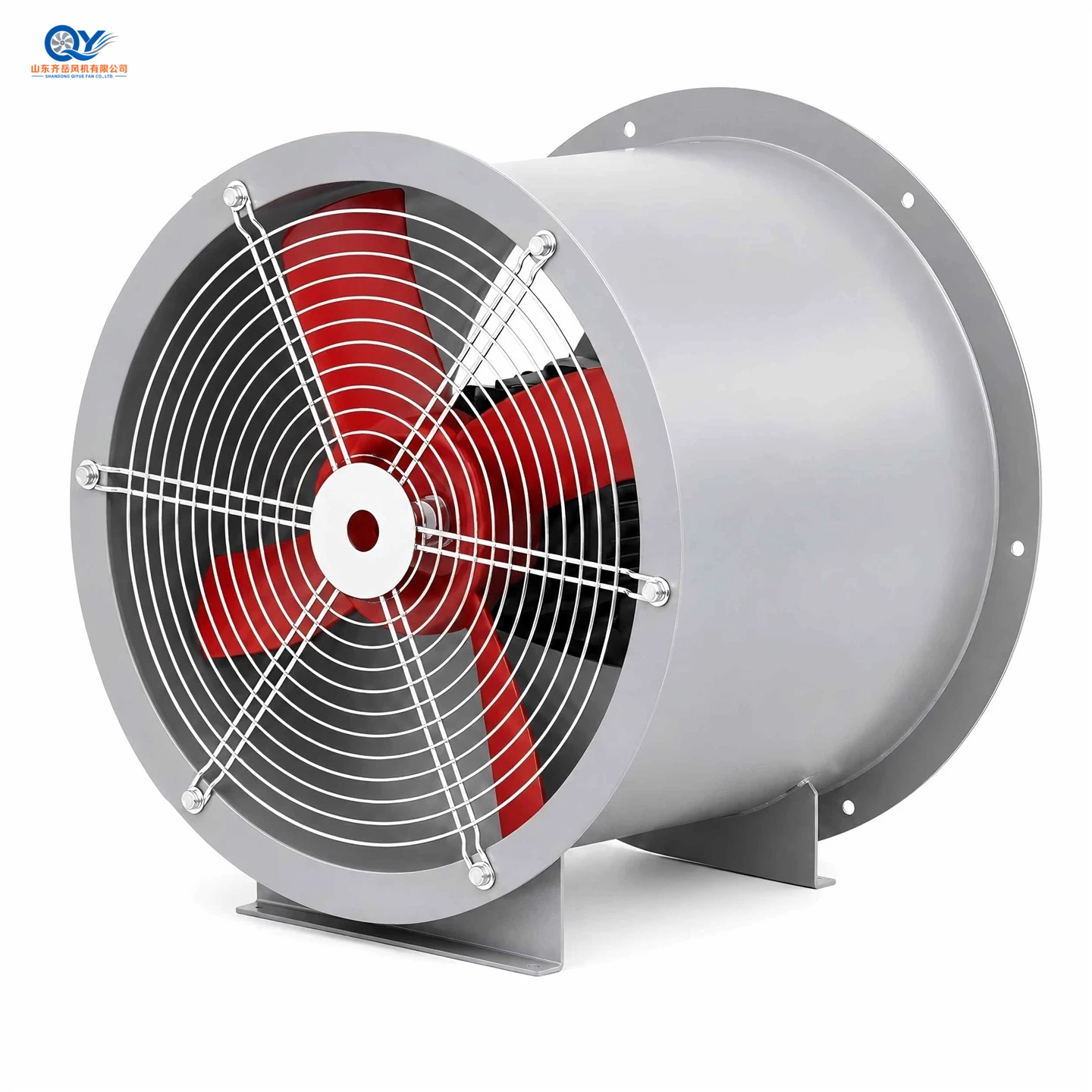
The T35-11 / BT35-11 family is a starting point for large-airflow, relatively low-resistance ventilation. Check the selected curve against the complete pressure requirement rather than treating the series’ maximum airflow as the installed duty.
Keep the accessories in the selection
Inlet and outlet obstructions, nearby geometry and accessories can reduce installed fan performance. AMCA recommends accounting for these effects during selection. Ask which accessories are included in the quoted performance and which losses must be added separately; do not count the same loss twice.
Weather louver or hood
Specify the actual model, airflow direction and mounting position. Request its pressure-loss data at the project airflow and its applicable rain-performance evidence. A photograph or the word “weatherproof” does not define performance under the site’s exposure.
Protective guard and screen
State the required function and which side is fitted. Keep the selected mesh, frame and mounting details with the order. If the building specification calls for an additional screen, have the complete combination reviewed rather than substituting a visually similar mesh after selection.
Backdraft shutter or damper
Confirm whether it is gravity-operated or powered, its intended mounting orientation and operating state during fan selection. Record who supplies the actuator, wiring and interlock where applicable. An open damper still needs a defined performance basis.
Separate three dimensions before comparing quotations
- Building opening: the available opening and wall thickness, measured with units and an inside/outside reference.
- Fan connection: casing, flange, fixing pattern and support details on the proposed drawing.
- Accessory passage: the manufacturer’s stated free area and pressure-loss information for the actual louver, guard or hood.
A nominal size alone does not close these interfaces. Request one coordinated arrangement showing the fan, wall sleeve or transition, weather-side assembly and service access. State which contractor supplies each item.
Compare the complete package, not only motor power
Two offers should be evaluated at the same airflow, pressure basis, air condition and accessory configuration. Keep any fan-only curve clearly separate from performance quoted with the complete assembly. If the required resistance is beyond the proposed axial fan’s curve, review a different fan selection rather than accepting the nearest casing diameter.
For a replacement, retain photos of both sides of the wall, the old nameplate, dimensions and the current operating arrangement. Tell the supplier whether shutters, screens, duct sections or production requirements have changed.
Send one coordinated wall-fan brief
Include required airflow and pressure basis; ventilation purpose and air conditions; replacement-air path; wall opening and thickness; inside/outside photos; proposed louver, hood, guard and shutter details; electrical supply; noise requirements; quantity; and delivery destination. Identify the accessories supplied by others so their data can be included in the review.
For workshop-wide ventilation and make-up air, see the system guide in Русский · العربية
Keep protection and process requirements intact
Do not remove guards to recover airflow. Have the responsible designer confirm guarding, service isolation and safe access. Hazardous gases, combustible dust or fire-smoke duties require a separate application and compliance assessment; ordinary workshop ventilation equipment is not a substitute.
Already seeing low airflow? Use the installed airflow review to compare the actual system with its selection basis.
For greenhouse installations, use the greenhouse exhaust fan replacement checklist to compare the installed duty, accessories, controls and replacement scope.
Engineering reference: AMCA: Mitigating System Effect to Optimize Fan Performance and Efficiency. Product reference: QIYUE FAN T35-11 / BT35-11 technical page linked above.